7 Warning Signs Your Panama City Beach Lawn Needs Professional Care
Your lawn is one of the first things visitors notice about your home. Yet many homeowners in Panama City Beach don't realize their grass is struggling until serious damage has already occurred. The good news: most lawn problems show clear warning signs before they become expensive to fix. Recognizing these signs early means you can act before your landscape suffers permanent damage. This guide walks you through the most common indicators that your lawn needs professional lawn care and maintenance services.
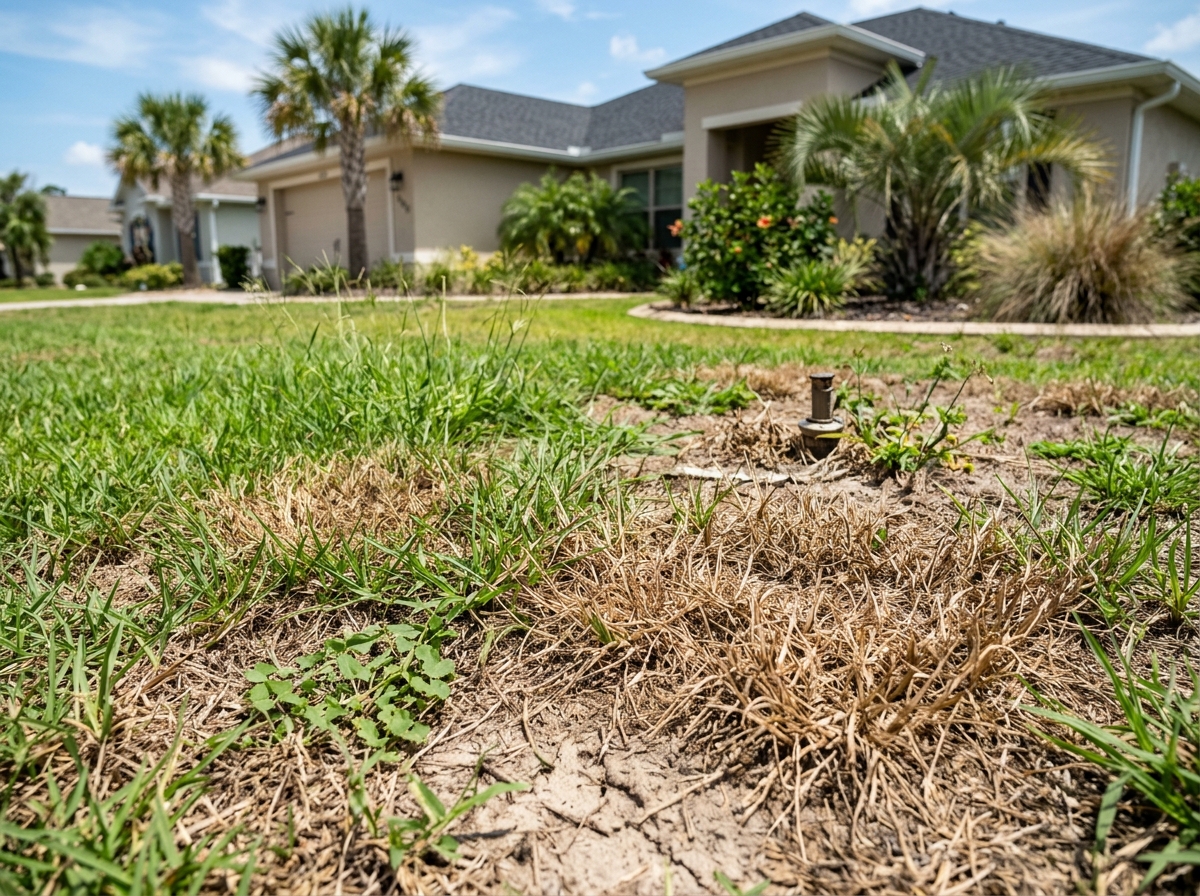
Bare Patches and Thin Spots Appearing Across Your Yard
Healthy lawns should have dense, consistent coverage. If you're noticing bare patches, thin spots, or areas where soil is visible through the grass, something is wrong. These areas can appear suddenly or develop gradually over weeks.
Bare patches often result from poor irrigation coverage, soil compaction, disease, or pest damage. In Panama City Beach's warm, humid climate, fungal diseases spread quickly through weak grass. If you wait too long to address bare spots, weeds will colonize those areas. Once weeds establish deep root systems, they become exponentially harder to eliminate and can spread to healthy grass nearby.
The longer bare patches persist, the more soil erosion occurs, especially during our frequent afternoon storms. This creates drainage problems and further weakens surrounding turf.
Uneven Water Pooling or Dry Spots After Watering
Inconsistent watering patterns are a major problem in Panama City Beach yards. You might notice puddles forming in some areas while other sections stay dry despite running your sprinklers. This indicates your irrigation or sprinkler system isn't distributing water evenly.
Common causes include misaligned sprinkler heads, clogged nozzles, broken lines, or uneven terrain. Some homeowners respond by watering more, which wastes water and money while creating new problems like fungal growth in overwatered areas and continued drought stress in dry zones.
Ignoring uneven watering leads to dead patches in dry areas and disease in soggy spots. Over time, your water bill climbs while your lawn declines. Professional assessment can identify exactly where coverage is failing and fix the root cause.
Yellowing, Discolored, or Browning Grass
Grass should be a vibrant green (or dormant tan in winter). If your lawn displays yellow, brown, or grayish tones, it's signaling distress. Discoloration often indicates nutrient deficiencies, disease, insect damage, or irrigation problems.
In Panama City Beach's sandy soil, nutrient deficiencies are common. Nitrogen, iron, and potassium leach through sandy soil quickly, especially during rainy season. Without proper fertilization tailored to our local conditions, grass cannot maintain its color or vigor.
Disease and pest damage also cause discoloration. If the problem is fungal disease, waiting allows it to spread to healthy turf. Some diseases can kill entire sections of lawn within weeks. Delaying treatment means replacing more grass later, which is far more expensive than preventive care.
Increased Weed Growth and Invasive Plants
Weeds thrive where healthy grass doesn't. If you're suddenly seeing more dandelions, crabgrass, or broadleaf weeds, your lawn is weak. Healthy, dense turf naturally crowds out weeds through competition.
Increased weeds signal that grass isn't getting what it needs: proper water distribution, nutrients, or disease management. As weeds establish, they compete harder for resources, further weakening grass. Weeds also spread seeds, making next season's problem worse.
Many homeowners try to solve weeds by hand-pulling or using weedkillers, but without addressing why grass is weak in the first place, weeds return. Professional lawn care includes identifying the underlying cause and restoring grass health so it naturally outcompetes weeds.
Soft, Spongy, or Mushy Soil with a Sour Smell
Walk across your lawn. Does it feel squishy or spongy? Do you notice a sour, unpleasant smell? These are signs of overwatering, poor drainage, or fungal issues. Soggy soil creates anaerobic conditions where harmful bacteria and fungi thrive.
This is especially concerning in Panama City Beach, where our water table is high and soil is sandy. Poor drainage combined with our humid climate creates perfect conditions for root rot, fungal diseases, and insect problems. If you continue overwatering, you'll see grass die, mold growth, and possibly mosquito breeding grounds.
Addressing drainage and irrigation timing now prevents expensive restoration later.
Visible Insect Damage or Pest Activity
Look for chewed grass blades, small holes in the turf, or visible insects like chinch bugs, sod webworms, or grubs. You might notice birds or moles digging in your lawn, which indicates a grub problem underneath.
Pest damage starts small but accelerates quickly in our warm climate. Grubs and chinch bugs reproduce rapidly, and their damage compounds monthly. By the time damage is obvious to the naked eye, the population is often large enough to kill significant turf areas.
Early intervention stops pest populations before they cause widespread damage. Waiting means replacing large sections of lawn instead of treating early.
Thatch Buildup or Dense, Matted Grass
Run your fingers through your grass. You should reach soil easily. If there's a thick, spongy, matted layer between grass blades and soil, that's thatch buildup. Excessive thatch prevents water and nutrients from reaching roots and creates an ideal environment for pests and disease.
In Panama City Beach's climate, thatch builds up quickly. Without professional management, it worsens each year. Eventually, grass cannot survive in thatch, and restoration requires removing the entire layer, which is expensive and time-consuming.
Poor Response to Your Current Watering Schedule
If you've adjusted your sprinkler timer multiple times but your lawn still looks stressed, your current approach isn't working. This often means the problem isn't simply about watering more or less. It could be a sprinkler system repair or maintenance issue, soil problem, disease, or pest infestation.
Continuing to guess wastes water, money, and time while your lawn deteriorates. Professional diagnosis identifies the actual problem so the right solution can be applied.
Your lawn communicates its needs through these warning signs. Catching problems early is always easier and more affordable than waiting for severe damage. In Panama City Beach's unique climate, proper lawn care requires understanding local soil conditions, humidity, and pest pressures. If you're noticing any of these signs, don't wait for the problem to worsen. Contact Panama City Beach Lawn & Irrigation, LLC for a professional lawn assessment. We'll identify exactly what's happening with your lawn and recommend the right lawn maintenance approach to restore it to health. Early action saves money, time, and frustration.