November Lawn Care in Panama City Beach: Essential Fall Maintenance Before Winter
November marks a critical transition period for lawns in Panama City Beach. As temperatures begin to cool and rainfall patterns shift, your grass enters a dormancy phase that requires thoughtful preparation. Many homeowners assume their lawn care needs diminish in the fall, but November is actually when strategic maintenance pays the biggest dividends for spring growth. Understanding what your lawn needs right now, and adjusting your irrigation and care practices accordingly, will set you up for a healthier yard come spring.
Understanding November Weather Patterns in Panama City Beach
Panama City Beach experiences a unique climate that influences lawn health throughout the fall and winter months. In November, average temperatures drop from the 70s into the low 60s, and humidity levels decrease significantly. Rainfall becomes less predictable, with some years bringing tropical systems and others remaining relatively dry. This variability is exactly why November is the time to reassess your lawn care strategy.
Your grass has likely been stressed by summer heat and increased irrigation demands. Now, as growth naturally slows, your lawn needs less water but more thoughtful nutrient support. The cooler temperatures mean your sprinkler system, which may have been running heavily through September and October, needs adjustment to avoid overwatering and promoting fungal issues.
Adjusting Your Irrigation System for Fall and Winter
One of the most important tasks in November is reprogramming your sprinkler system to match seasonal water needs. Many homeowners leave their systems on the same schedule year-round, which can lead to problems.
In November, most grass types in Panama City Beach require significantly less water than they did during summer months. A good rule of thumb is to reduce irrigation frequency by 25 to 50 percent compared to summer settings. Instead of watering every two to three days, most lawns do well with weekly or bi-weekly irrigation, depending on rainfall.
Check your sprinkler heads for debris and damage. Fall leaves and storm debris can clog nozzles, creating dry spots or uneven water distribution. Clear gutters and downspouts so they direct water away from foundation areas rather than creating soggy patches near your home.
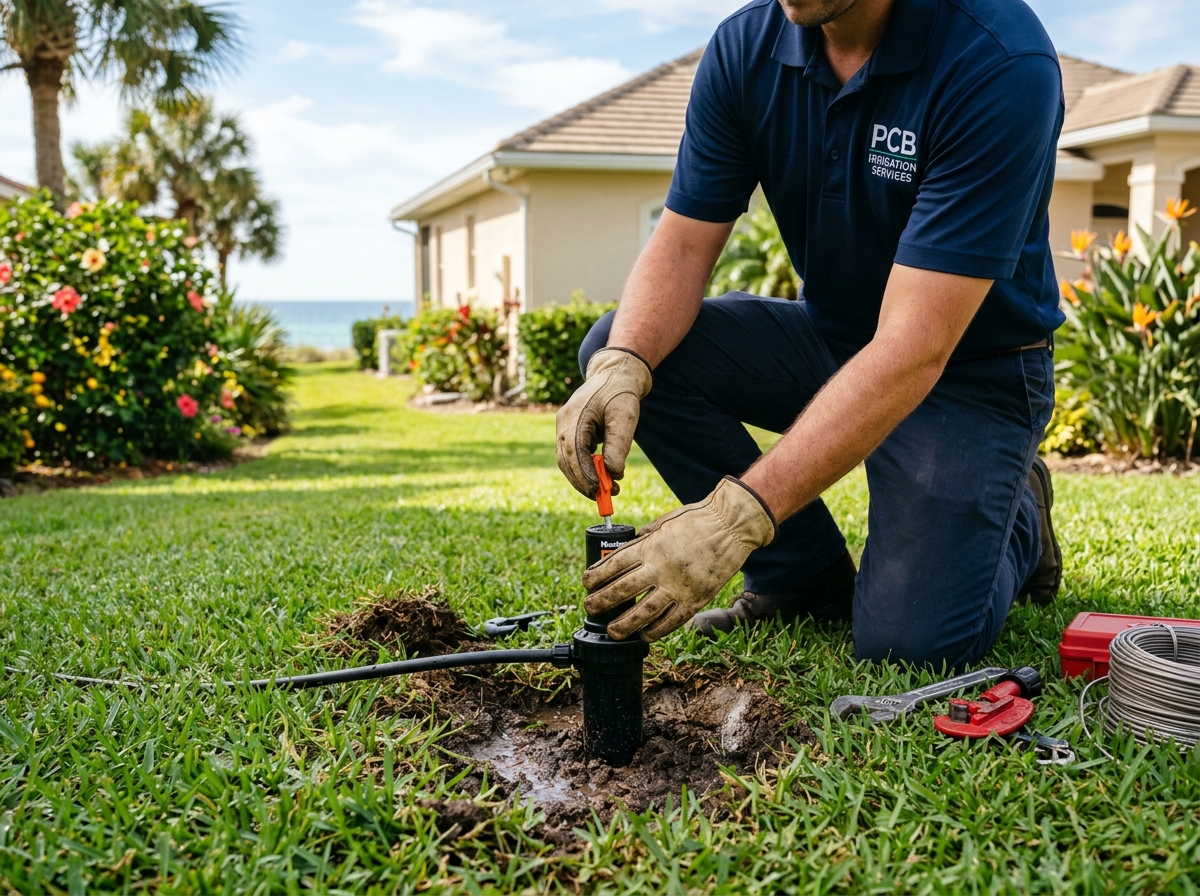
Consider scheduling a professional irrigation audit if you haven't had one recently. A qualified technician can identify leaks, misaligned heads, or system inefficiencies that waste water and money. This is also an ideal time to address any sprinkler system repair needs before winter arrives.
Fertilization and Nutrient Management in November
November is prime time for fall fertilization in Panama City Beach. While your grass is growing more slowly, it's actively developing strong root systems and preparing for dormancy. A balanced fall fertilizer with slightly higher potassium content supports root development and improves cold tolerance.
Apply a slow-release fertilizer in early to mid-November, aiming for products with an NPK ratio that emphasizes potassium (the third number). This nutrient strengthens cell walls and helps grass withstand temperature fluctuations. If you applied a summer fertilizer in September, check the label to ensure you're not over-applying nitrogen, which can encourage tender new growth vulnerable to cold damage.
For most homeowners, one fall application is sufficient. However, if your lawn is thin or recovering from summer stress, a second light application in December can help. Always water in your fertilizer to activate it and prevent burn.
Addressing Lawn Weeds and Bare Spots
November is an excellent time to tackle weeds and bare patches. Cooler temperatures make it safer to apply certain herbicides, and you'll have time to address problem areas before dormancy. Broadleaf weeds are particularly susceptible to fall treatments because plants are translocating nutrients downward to roots, carrying herbicides deep into the system.
Bare or thin spots should be overseeded in November if you haven't already done so. The cooler weather and increased fall moisture create ideal conditions for seed germination. Prepare the soil by lightly raking or scarifying, apply quality seed, and keep the area consistently moist (but not waterlogged) until germination occurs.
Leaf Management and Lawn Health
November brings falling leaves to Panama City Beach yards. While leaves add organic matter to soil, excessive accumulation can smother grass and create conditions for fungal problems. Mulch leaves with your mower if possible, breaking them into small pieces that decompose quickly and add nutrients back to the soil. This approach is easier and more beneficial than bagging and removing them.
If leaf accumulation is heavy, remove the thickest layers but leave some mulched debris on the lawn. This protects grass crowns and provides insulation during temperature dips.
Preparing for Winter Dormancy
In Panama City Beach, most cool-season grasses slow growth significantly by late November and enter dormancy. Warm-season grasses like St. Augustine and Bahia grass may also show browning or dormancy signs. This is normal and not a sign of disease or neglect.
Reduce foot traffic on dormant grass when possible, as it's more susceptible to damage. Avoid heavy equipment operation or repeated walking on the same paths. If you're planning any lawn maintenance work or aeration, November is an excellent time before dormancy sets in completely.
Professional Irrigation Maintenance
Consider scheduling professional sprinkler system maintenance before December. A technician can winterize your system if needed, check for leaks, test water pressure, and ensure all components are functioning properly. This preventive approach prevents costly emergency repairs during winter and ensures your system is ready for spring.
November is your opportunity to transition your lawn care practices thoughtfully from fall into winter. By adjusting irrigation schedules, applying appropriate fall fertilizer, managing weeds and bare spots, and preparing for dormancy, you're investing in a healthier lawn come spring. The steps you take this month will directly influence how quickly and vigorously your grass greens up when warm weather returns. If you're uncertain about any aspect of your lawn or irrigation system, reaching out to a local professional is a smart move. Panama City Beach's unique climate and soil conditions benefit from expert guidance tailored to your specific property. Your lawn will thank you for the attention you give it now.